


An engine name does not identify who selects a game's result or records the money. A recovery test exposes that division: after reconnection, the session should contain the existing accepted stake and its settled outcome, without a duplicate wager.
Game engine responsibilities
In casino development, 'engine' can mean a renderer, a reusable game framework or a remote game server. The renderer draws the game and handles input. A framework can track states such as bet accepted and result pending. A remote service can supply the authoritative result and connect it to the ledger. Engine comparisons need to identify which jobs each product performs.
A button press sends a request; the operator or game server determines whether the stake was accepted. Retrying after a timeout must not create a second wager. The client needs to display the server's answer even if its animation failed after the round completed.
Reuse spreads defects as well as fixes. Version records need the engine build, game configuration, paytable and asset package sent to each operator. For operators under the Online Casino Gambling Act, New Zealand’s 2026 standards require logs of game activation, deactivation and modification. These records connect a complaint to the build that was live.
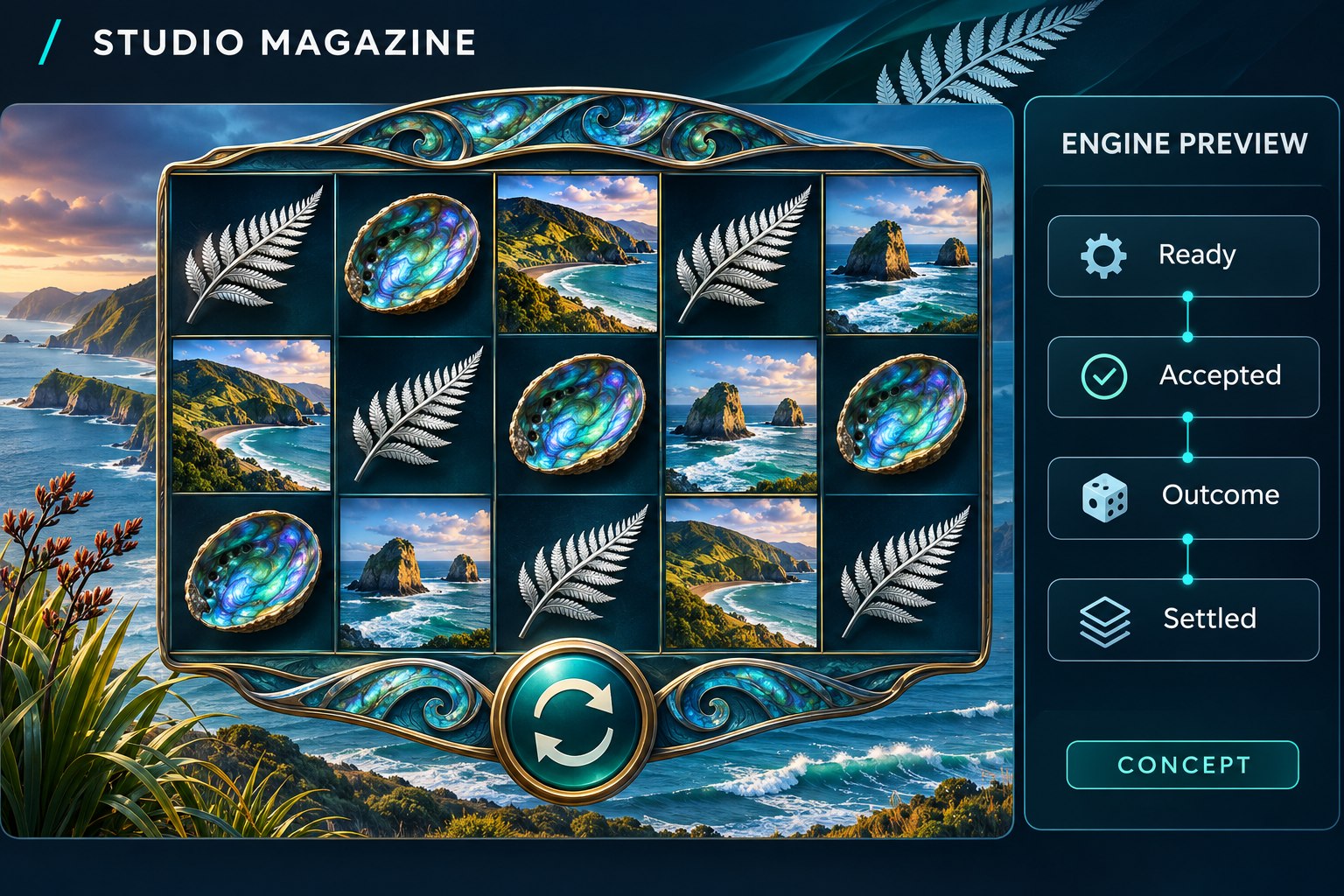
A round traced through the engine
After a connection loss following stake acceptance, recovery must retrieve the existing round without sending a second paid request.
| State | Authoritative event | Failure to guard against |
|---|---|---|
| Ready | Rules, stake and active game configuration are identified. | Showing a rule set from another version. |
| Stake accepted | A unique round and transaction ID tie the wager to the account. | A repeated tap creating a second wager after a timeout. |
| Outcome selected | The game server records the result under the active mathematics. | Re-selecting an outcome because the client animation failed. |
| Settled and displayed | Balance, result and history agree after reconnection. | A screen showing an old animation as a new round. |
A version record needs the game ID, mathematics configuration, rules date, engine build and activation period. DIA's logging and recovery duties do not certify a supplier's engine. A public case study can pair the version with a test trace while keeping customer records private.
Recovery depends on the unfinished decision
GLI-19 v4.0 section 6.16 distinguishes three cases when the connection or application fails:
- No further player input: the game can finish, with the history and balance showing the completed outcome.
- An unfinished single-player decision: restore the state before interruption so the player can complete it, unless disclosed recovery rules take precedence.
- A missed multiplayer action: complete it under the disclosed rules, record any decisions made by the platform and preserve the other players’ ability to finish.
The standard keeps funds for a continuable interrupted game pending until completion and makes those amounts available to the player. Its bonus-recall requirements cover the last 50 events, or every event in a shorter feature. A final screenshot cannot replace the intermediate decisions and awards. These are industry testing criteria; New Zealand’s separate operator duties still govern the deployment.
A lost response is not a rejected wager
HTTP Semantics, section 9.2.2, cautions against automatically retrying a non-idempotent request without evidence that the retry is safe or that the original was never applied. A recovery endpoint and duplicate-handling rule must be defined by the actual system.
Separating presentation from mathematics
A slot animation presents a selected outcome. Its symbols, features and awards must agree with the game rules. New Zealand's standards prohibit a secondary game-program decision from changing, discarding or manipulating selected elements and outcomes. They also require the outcome distribution to match expected or theoretical probabilities.
An engine may support several RTP configurations. The rules shown to the player must match the deployed mathematics. To test that match, identify the game build, configuration and outcome record; a supplier's generic help screenshot cannot identify a platform's active version.
Live software coordinates physical results with betting windows, stream overlays and settlement. Multi-stage game shows need a defined state for each stage. New Zealand's 2026 standards also require commercial-quality equipment, protected studio areas and dealer surveillance, which the client software cannot provide by itself.
| Layer | Typical responsibility | Evidence |
|---|---|---|
| Rendering | Frames, sound and touch input | Device tests and screenshots |
| Game state | Round transitions | State-machine tests |
| Outcome service | Selection and mapping | Math and RNG evaluation |
| Platform | Account and settlement | Audit and transaction logs |
Performance on mobile networks
Large assets can delay interaction; heavy compression can make numbers and rules unreadable. The mobile client needs to display the stake, balance, accepted state and result across screen sizes and input methods. Rotation or app switching during a round should restore the server state rather than create a new local one. A timeout display must distinguish an unanswered request from a rejected wager and provide access to the ledger. Resuming must not repeat a paid action. New Zealand's standards require timely recovery, restoration of events where possible and a customer-favourable resolution if a game cannot continue.
Measure asset loading, frame rate and transaction response separately. A smooth animation can coexist with a stale account balance. Pairing device measurements with round IDs and server records shows where the delay occurred.
GLI-19 v4.0 section 6.2 expects device rotation, resizing and overlays to keep selections accurately mapped and avoid interrupting the current session. Test a rotated phone after a stake is accepted: the client should fetch the same round ID, balance and result rather than redraw an apparent new round. GLI-19 supplies industry testing criteria; its certification alone does not establish compliance with New Zealand law.
Release control and verification
An art update needs display checks; changed symbol weights need mathematical evaluation; changed payment handling needs integration tests. The release record should identify what changed and who may alter the deployed game. 'Engine update' alone gives neither answer.
Gaming Laboratories International’s interactive gaming standards cover evaluation of RNGs, outcomes, platform controls and security. Each jurisdiction applies its own rules. A report on one component and version does not establish compliance across New Zealand deployments.
A release checklist can pair each changed component with its evidence: animation and touch-map checks for presentation; probability and paytable review for mathematics; duplicate-request and ledger tests for settlement. GLI-19 v4.0 separates platform/account requirements, remote player applications, RNG and game behaviour. The scope of any lab report should name the tested build and components. DIA’s minimum standards separately require an audit trail for activated, deactivated and modified games.
A deployed casino product is subject to adult identity checks and player controls, not only engine tests. Safer Gambling Aotearoa provides 24/7 help at 0800 654 655 for people affected by gambling.