
New Zealand's online casino law is in force, but its licensed market is still being established. As of November 2026, DIA's successful auction participants have the right to apply; licence approval is a later decision.
The law and the transition
According to DIA’s licensing timeline, the Online Casino Gambling Act 2026 took effect on 1 May 2026, with the Department of Internal Affairs as implementing regulator. Its process moves from expressions of interest through auction to detailed applications. Eleven entities won the right to apply for the 15 available licences. DIA expects the full licensed system to operate in 2027.
Casinos serving New Zealand before 1 May 2026 may continue temporarily, but no new provider may enter during the transition. From 1 December 2026, a provider without an application must stop offering online casino gambling to people in New Zealand. Applicants may continue during assessment without advertising. Continued operation does not establish an issued licence.
Online racing and sports betting is restricted to TAB NZ and permitted brands under a separate framework. The Gambling Act 2003 still governs other gambling activities; the 2026 Act covers online casinos. The product and operator activity determine which rules apply.
| Stage | What it means | What it does not mean |
|---|---|---|
| Auction success | Right to submit a full application | A granted licence |
| Application under assessment | Transitional permission if eligible | Final approval |
| Issued licence | Regulator has approved a named operator | Approval of every possible supplier claim |
DIA’s current licensing outline says each licence covers one brand and its customer platforms, lasts up to three years and may be renewed for a further five. An entity cannot receive more than three licences in this initial process. These limits matter when a corporate group operates several sites: an auction place for the company does not approve every brand it owns.
When licences are issued
DIA plans a public register of licensed online casinos and a unique registration icon. Only an approval can establish a licence; an applicant's proposed brand may not yet be public. The full regime is expected in 2027, while DIA determines individual decision dates. Its licensing and provider pages carry public application and future licence status. Supplying a game does not give its developer permission to operate a customer-facing casino.
If a provider leaves the market
DIA advises departing providers to give notice, return money owed and maintain withdrawal, support and account-closure routes. Those without an application must stop enabling online casino play in New Zealand from 1 December 2026. Existing customers may still be allowed to use non-gambling account functions.
| Stage | DIA rule or recommendation | Record worth checking |
|---|---|---|
| Notice before exit | Recommended: state the exit date, withdrawal steps and support channel. | Dated notice, account balance and stated withdrawal method. |
| Access restriction | Required: stop online casino participation for people in New Zealand if no application was made. Non-gambling account tasks may remain available. | Whether paid play is disabled while balance and support functions remain reachable. |
| Balance resolution | Recommended: return money owed, process uncommitted funds and arrange account closure or unclaimed balances. | Transaction IDs, withdrawal confirmation and any support correspondence. |
DIA's exit guidance does not establish what a named provider has done. Resolving a disputed balance requires that provider's account and transaction records.
A customer should still be able to identify withdrawal and support routes when paid play is disabled. The DIA player page describes the future public register and regulator complaint route once licences are issued; an auction list or copied brand icon proves no present licence status.
Online casino advertising limits
DIA’s current advertising prohibition covers online casino promotions, including bonus links and sign-up offers. Its advice addresses publishers, platforms, influencers and other third parties, and describes powers to remove unlawful advertisements. Policy for later licensed advertising includes a ban on affiliate marketing and paid endorsements.
An explanation of mechanics or a public licensing step does not by itself direct someone to gamble. Sign-up links and paid operator rankings serve a promotional purpose. Dated public records are needed to distinguish a supplier, applicant and licensed operator.
Technical standards for games
The 2026 minimum standards require cryptographically secure software pseudo-random generators with unpredictable, properly distributed output. They prohibit adaptive or compensated behaviour and require mapping to preserve certified probabilities. Platforms must monitor output and deactivate affected games after anomalies. Live dealer games have separate equipment, secure-area and surveillance controls.
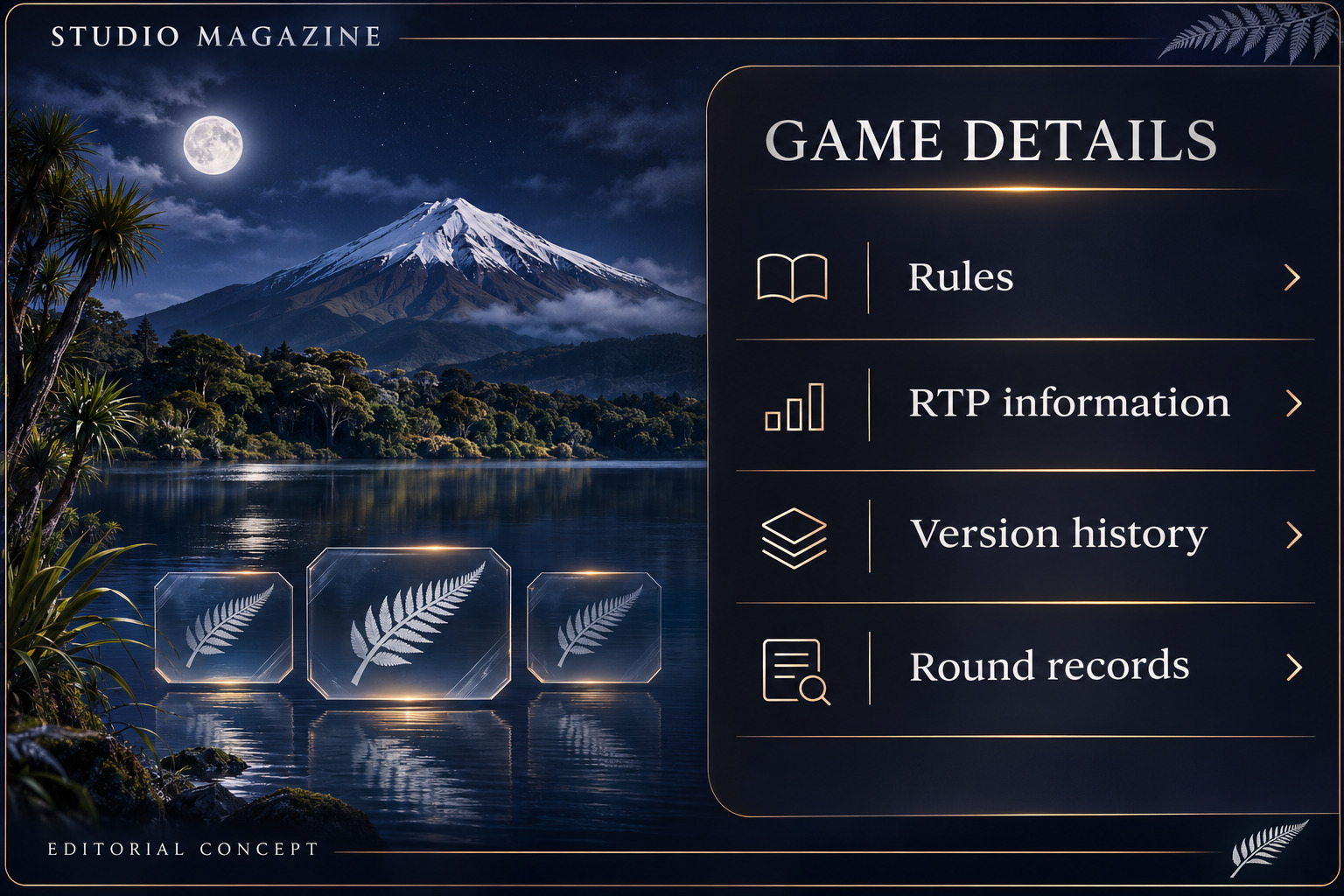
Customers must have access to rules, winning odds and theoretical RTP. Differences in odds or return between equivalent free and paid games must be disclosed before a stake. Each round needs a separate deliberate start, with at least 2.5 seconds from one start to the earliest next start. Slots cannot be combined for simultaneous play.
Platforms must keep traceable transactions and log changes to active games. They must recover promptly from interruptions and restore events where possible. If a game cannot continue, the customer receives winnings reached or a returned bet, whichever is better. A component's test certificate does not establish compliance of the integrated service.
Player protection and support
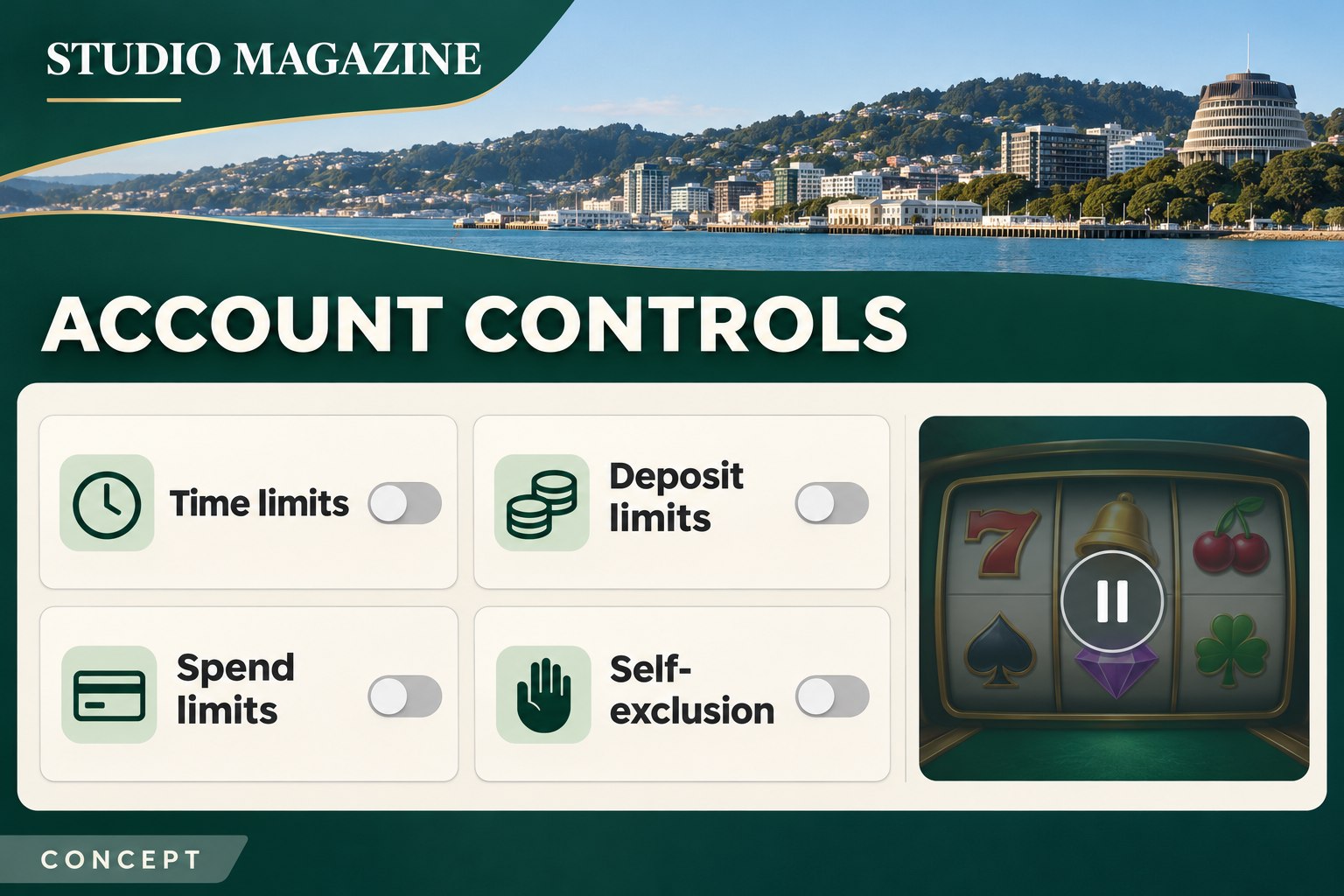
For operators under New Zealand’s online casino regime, time, deposit and spend limits must be easy to reach. Regulation 5 defines spend as all money bet, paid or staked, including previous winnings used for further gambling. A spend limit counts repeated stakes; a deposit limit concerns money paid into the account. Neither is a measure of net losses. Increasing or removing a limit requires a wait of at least 24 hours.
DIA’s harm-prevention guidance allows a daily period to mean a calendar day or a rolling 24 hours; the operator must explain its choice when a customer sets a limit. The guidance recommends calculating deposit limits from gross deposits, without subtracting withdrawals. That is a recommendation about the calculation, rather than a basis for assuming every platform resets its daily limit at midnight or uses withdrawals to restore deposit allowance.
Breaks, time-outs and pop-up alerts must remain accessible. Self-exclusion has a stricter return process under regulation 8: the chosen exclusion period cannot be shortened. After it ends, the customer must access the account, acknowledge available gambling-help services and state an intention to return; a further 24 hours must pass before play can resume. The end date alone does not reopen gambling access.
Gambling harm can affect families and whānau as well as the person playing. Independent support and account-level controls serve different purposes: a helpline can offer help, while the operator applies limits, pauses and exclusion to the account.
DIA’s consumer-protection guidance requires identity and age checks before account activation. It says a customer’s uncommitted account funds cannot be made subject to withdrawal terms, while a delay in returning funds needs a legitimate reason. Complaint instructions must also be available without logging in.
The independent Safer Gambling Aotearoa service offers 24/7 help for individuals and whānau on 0800 654 655 or by free text to 8006. These routes do not depend on holding a casino account.
From complaint record to a traceable response
- At submission
Record the operator, date, complaint reference, balance and disputed transaction or round IDs. Keep a copy of what was submitted.
- During investigation
DIA's guidance expects a reasonable opportunity to explain the concern, careful consideration of evidence and appropriate progress updates.
- Within 40 working days
The guidance cites the Act's requirement to investigate and respond within this period. Working days are not the same as calendar days.
- When a response arrives
Match it to the original reference and disputed record. Retain the reasons, any remedy offered and any issues left unanswered.
The response duties are described in DIA's July 2026 consumer-protection guidance, page 9, for operators under the New Zealand regime. The duty to investigate and respond does not guarantee a refund or automatically apply to every offshore site.