


A phone can lose its connection after a server accepts a stake. Mobile design has to recover that round while keeping rules and account controls usable on the small screen.
The small-screen contract
Fitting the canvas to a phone does not guarantee a visible stake or balance. Touch controls need distinct targets, readable results and an unambiguous accepted-bet state. Decorative motion should neither obscure rules nor portray a loss as a near win.
Portrait and landscape views can need different layouts, especially when live video pushes the bet table below the fold. The betting window, selection and round status need to remain reachable without losing context. Larger text and screen-reader use require testing beyond a screenshot at one size.
For operators under the Online Casino Gambling Act, New Zealand’s 2026 standards require time tracking and easy access to rules, odds and theoretical RTP. Time, deposit and spend limits, breaks and self-exclusion must also be easy to reach after opening an account. Burying them in a long mobile menu can defeat that access.
The GLI-19 v4.0 interface section allows an abbreviated rules view on a small display only if the complete rules remain easy to reach. It also expects orientation and resizing to preserve accurate touch mapping without interrupting the session. A mobile review should open the full paytable, return to the same round and confirm that the stake control still corresponds to the selected amount. GLI is a testing benchmark; DIA’s operator standards govern the New Zealand deployment.
Testing mobile layouts and round recovery
A reproducible mobile test records the product, build, device, browser, viewport, text scale, network conditions and timestamp. Pass or fail follows the observed behaviour under those conditions.
| Test condition | Observation to record | Failure that changes the decision |
|---|---|---|
| 320 CSS-pixel width and enlarged text | Rules, odds, RTP, stake and limits remain readable without two-way page scrolling. | A required control disappears or its label is clipped. |
| Touch and keyboard navigation | Interactive targets can be reached and their selected state is visible. | Adjacent stake controls are too small or a screen reader misses a changed status. |
| Disconnect just after a deliberate stake action | Round ID, accepted stake, outcome, balance and history agree after reconnection. | The interface silently repeats the wager or displays an unresolved animation as a result. |
| Background the app during a live betting window | Return shows the authoritative table state and whether the bet was accepted. | Paused video is mistaken for an open betting period. |
WCAG 2.2 specifies reflow at 320 CSS pixels and minimum pointer targets of 24 × 24 CSS pixels, with defined exceptions. These criteria do not certify a casino; New Zealand’s operator standards separately cover rules, limits, traceable transactions and recovery. Record the device, browser, build, network, timestamp and any small-target exception, then check usability with zoom and assistive technology. For adult account requirements and independent help, see DIA guidance and Safer Gambling Aotearoa (0800 654 655, 24/7).
Connection recovery is part of the game
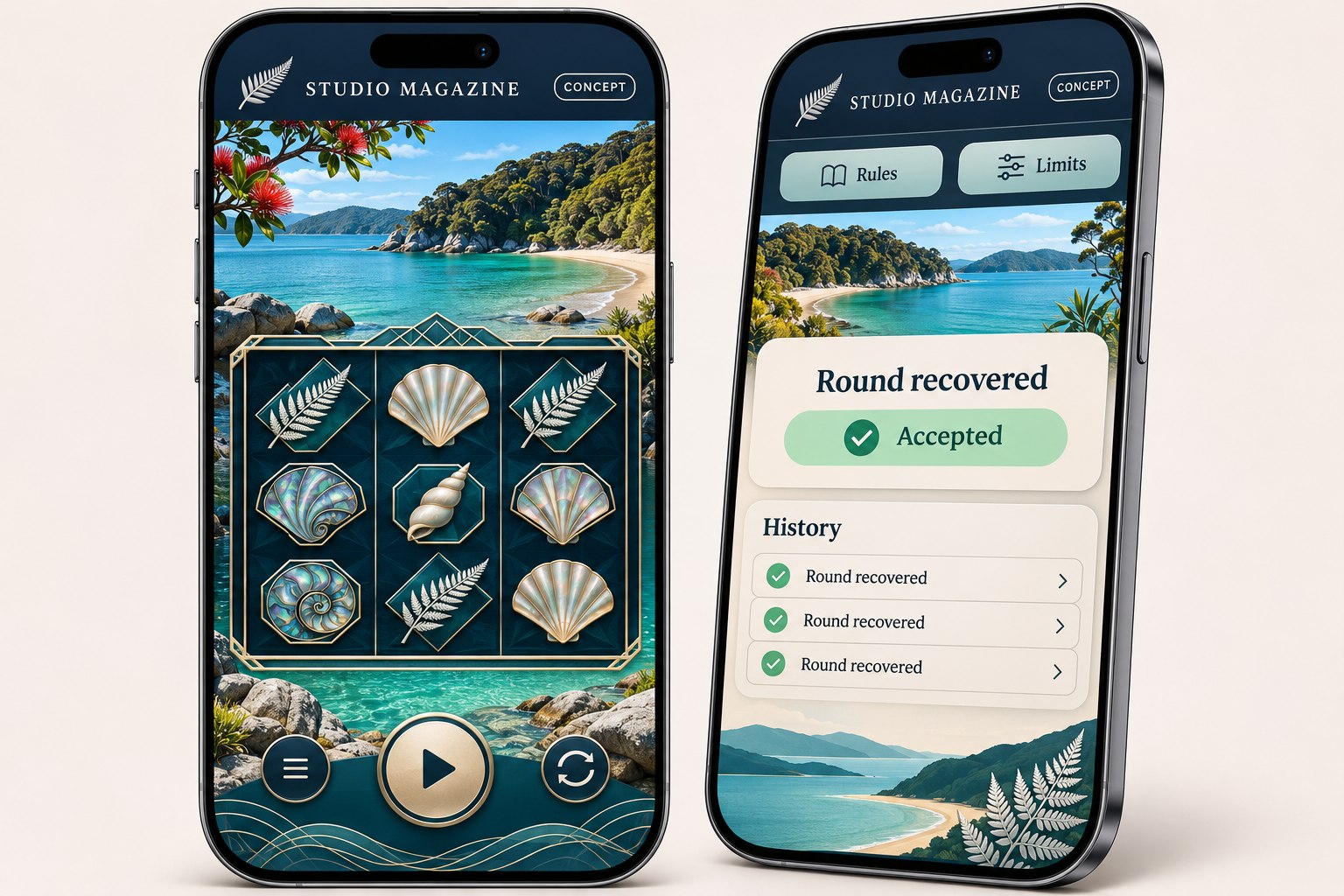
Network switches, calls and sleep can interrupt a wager before the phone displays acceptance. On reconnection, the client must retrieve the server's round state without submitting the same paid action again. The ledger should identify the round and settlement; an offline error mock-up cannot test this behaviour.
New Zealand's standards require timely recovery and restoration of prior events where possible. If the game cannot continue, the customer receives winnings reached or returned bets, whichever is better. Controlled interruption tests can examine particular cases, but a few sessions cannot establish complete platform compliance.
Backgrounding a live game may pause the video while the table continues. The returning screen must show whether the stake was accepted and whether betting has closed. Video smoothness says nothing about the accuracy of that transaction record.
Performance that matters
Asset size affects loading and mobile data use. Rules, stake and result can load before secondary animation. Measure loading, visual responsiveness and the delay between the server’s record and its visible account update separately on a mid-range phone with a constrained connection.
Google’s Core Web Vitals provide interface benchmarks: Largest Contentful Paint at or below 2.5 seconds, Interaction to Next Paint at or below 200 milliseconds, and Cumulative Layout Shift at or below 0.1. The recommended assessment uses the 75th percentile of real page views, with mobile and desktop measured separately. These are web-experience targets, rather than a casino certification.
INP measures the delay to the browser’s next visual response, rather than all later network requests and asynchronous updates. A stake button can react while the server’s answer is still pending. Keep three observations distinct: visible feedback, recorded wager acceptance and the settled balance. Round IDs and transaction records connect the last two to the correct game; an animation or a good responsiveness score cannot supply that record.
Selection must remain clear without colour alone. Important text should survive zoom, and reduced-motion settings must preserve the result. A person should be able to read the stake, its acceptance and settlement without relying on animation.
From prototype to published mobile product
A prototype can show layout and gestures. Before release, the operator also needs to connect the product to account and location controls. New Zealand's standards require access to be blocked when location cannot be verified. A language or currency choice does not meet that requirement. Restrictions should be clear before a partial paid action is exposed.
Test the same build across supported browsers, operating systems and older supported devices. A shared interface update can affect many titles. Record asset versions, game configurations and changed rules; moving a stake control also warrants usability testing.
DIA’s location guidance says location detection applies at customer login and is not a continuous requirement during that session. If a VPN or proxy makes New Zealand location unverifiable, the operator must block access. A mobile test can document the login decision separately from a later network switch; it should not claim a continuous tracking duty that the guidance does not state.